Google Business Profile in 2026: Broken? Here’s the Proven Fix
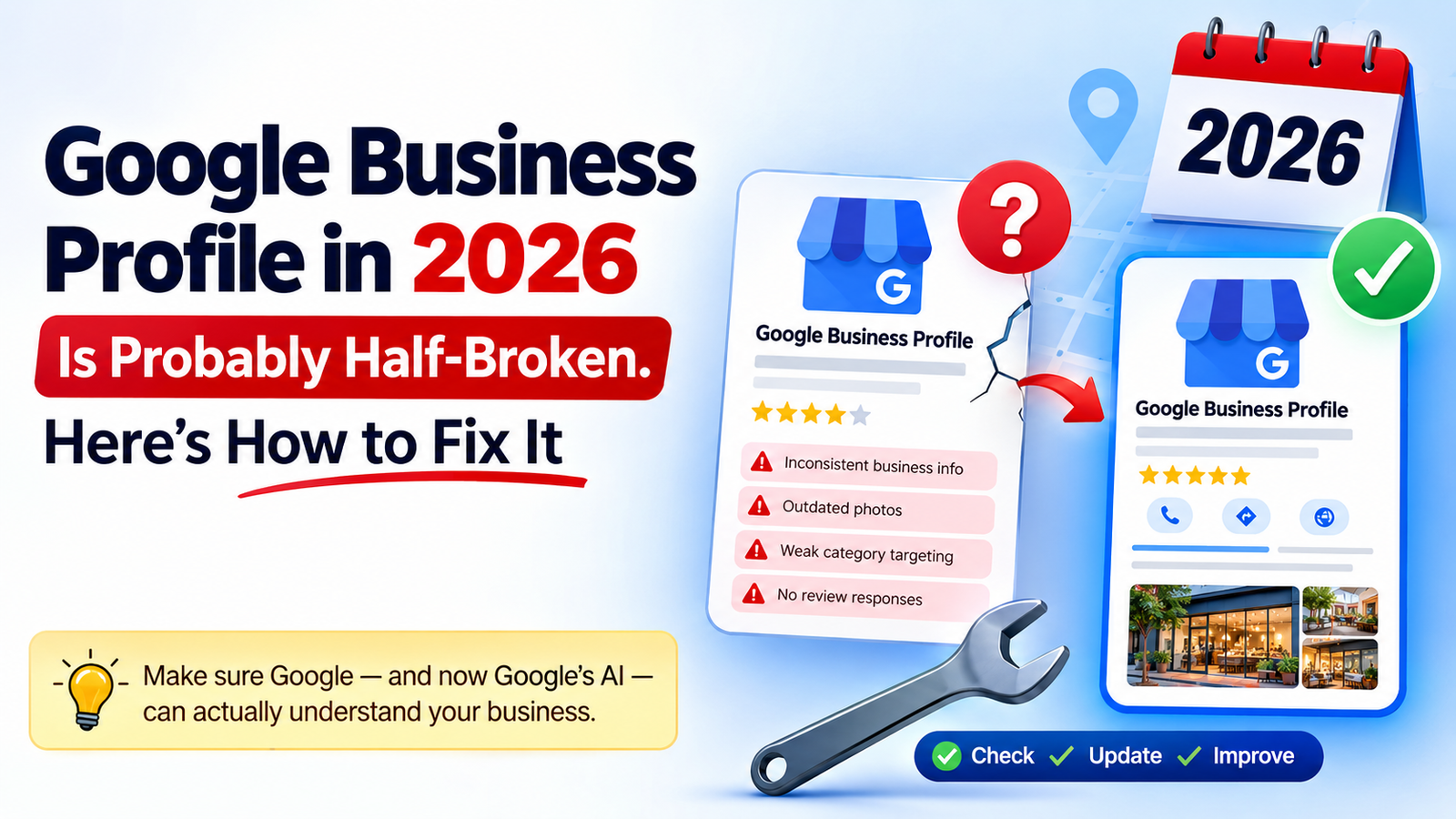
Hi, I’m Afsal Abdul Salam. I work as a freelance marketer. A big part of my day-to-day work is SEO. I help small businesses get found by the people searching for them. If there is one thing I have learned from looking at client accounts week after week, it is this: most business owners think their Google Business Profile in 2026 is fine just because it exists. It is not fine. It is just quiet. Being quiet is exactly the problem. The Client That Taught Me What “Broken” Really Looks Like A while back, I worked with a service business. This business depended entirely on Google Search and Maps to find new customers. One month, calls and requests for directions dropped a lot. However, the website traffic stayed about the same. On paper, nothing looked wrong. When I opened the Google Business Profile in 2026, the issue was easy to see. The business information didn’t match across listings. The photos hadn’t been updated in a long time. The category targeting was weak. Reviews were piling up without any answers. That is when it clicked for me: the business had not disappeared from Google. The Google Business Profile in 2026 was simply sending the signals to Google and to the people deciding if they should trust the business enough to call. Sometimes the biggest SEO problem is not your website. It is what Google thinks about your business, else. We went back to the basics. We corrected the business info, fixed the secondary categories, updated the services list, added real photos, and cleaned up the whole Google Business Profile. We saw movement within a week. It took two to three months before visibility and customer actions were consistently better. The lesson stayed with me: fixing a Google Business Profile is not about making it look better overnight. It is about making every signal around the business more consistent and more trustworthy. Why “Half-Broken” Is the Way to Describe Most Profiles Most Google Business Profile in 2026 I check are not abandoned. They are half-broken. The business exists; the address is mostly right. Maybe there are a few reviews. Underneath that, the details are old. The categories do not match what the business actually offers anymore. Nobody is replying to customers. That is the kind of “broken” that does not set off alarms—until the calls start dropping and nobody knows why. Think about it from the side of Google for a second. Google is not trying to figure out if your business exists. Google is trying to figure out if your business is worth recommending today to someone standing on a street corner or scrolling on their phone. A Google Business Profile in 2026 that has not been touched in eight months, with photos from a season and reviews that nobody answered, does not say “recommend me.” It just goes quiet in the rankings. Most owners never connect those dots back to their Google Business Profile in 2026. The Mistake I See Over and Over Again If I had to name one mistake local business owners make all the time, it is this: they treat their Google Business Profile in 2026 like a one-time setup of an active business asset. They create it, fill in the basics, upload photos, and walk away. Other people do the opposite. They try to stuff keywords into the business name or description, thinking that will help them rank. I would tell anyone doing either of those things to stop now. What actually works is simpler and slower: keep your information accurate, update the Google Business Profile in 2026 naturally as things change, add photos, respond to reviews, keep your services current, and make sure your website and other listings all say the same thing. Google does not need keywords crammed into your business name. Google needs signals that your business is real, active, relevant, and trustworthy. What’s Actually New About Google Business Profile in 2026 This is the part that is catching business owners off guard right now. It is worth paying attention to. Google Business Profile in 2026 is becoming more connected to AI. Google now lets some businesses connect their profile with Gemini. Their AI can help manage information, write review replies, look at customer feedback, and show insights about the Google Business Profile. New AI tools are also rolling out across the Google Business Profile in 2026 system. The bigger shift is happening outside the profile itself. Google’s AI experiences pull information from your website, your reviews, your business listings, and other places on the web to build a picture of what your business is. If that information is not the same or your reviews are old, Google’s AI might form a different idea of your business than the one you wanted. So in Google Business Profile in 2026, I would not tell a business owner to only focus on “ranking in the map pack” anymore. I would tell them to make sure Google—and now Google’s AI—can clearly understand who you are, what you do, where you work, and what customers actually think about you. This is becoming one of the quieter shifts in local SEO. Most business owners have not caught up to it yet. Here is a simple way to think about it. In the past, if your hours were wrong, the worst thing was a customer showing up at the door. Now an AI system might summarize your business to someone before they even open Maps. The AI might describe your hours, your services, or your specialty the way. The customer might never even notice the mistake. They just move on to the business that the AI described clearly and accurately. That is a higher-stakes version of the same old problem: bad data quietly costing you business. Google Business Profile Optimization 2026: A 3-Step Self-Check You do not need a tool or an agency to know if your Google Business Profile in 2026 is in trouble. Here is the same quick check I would run myself. 1. Check the Basics Make sure your business name, address, phone number, website, opening hours, primary category, and services are all
Read More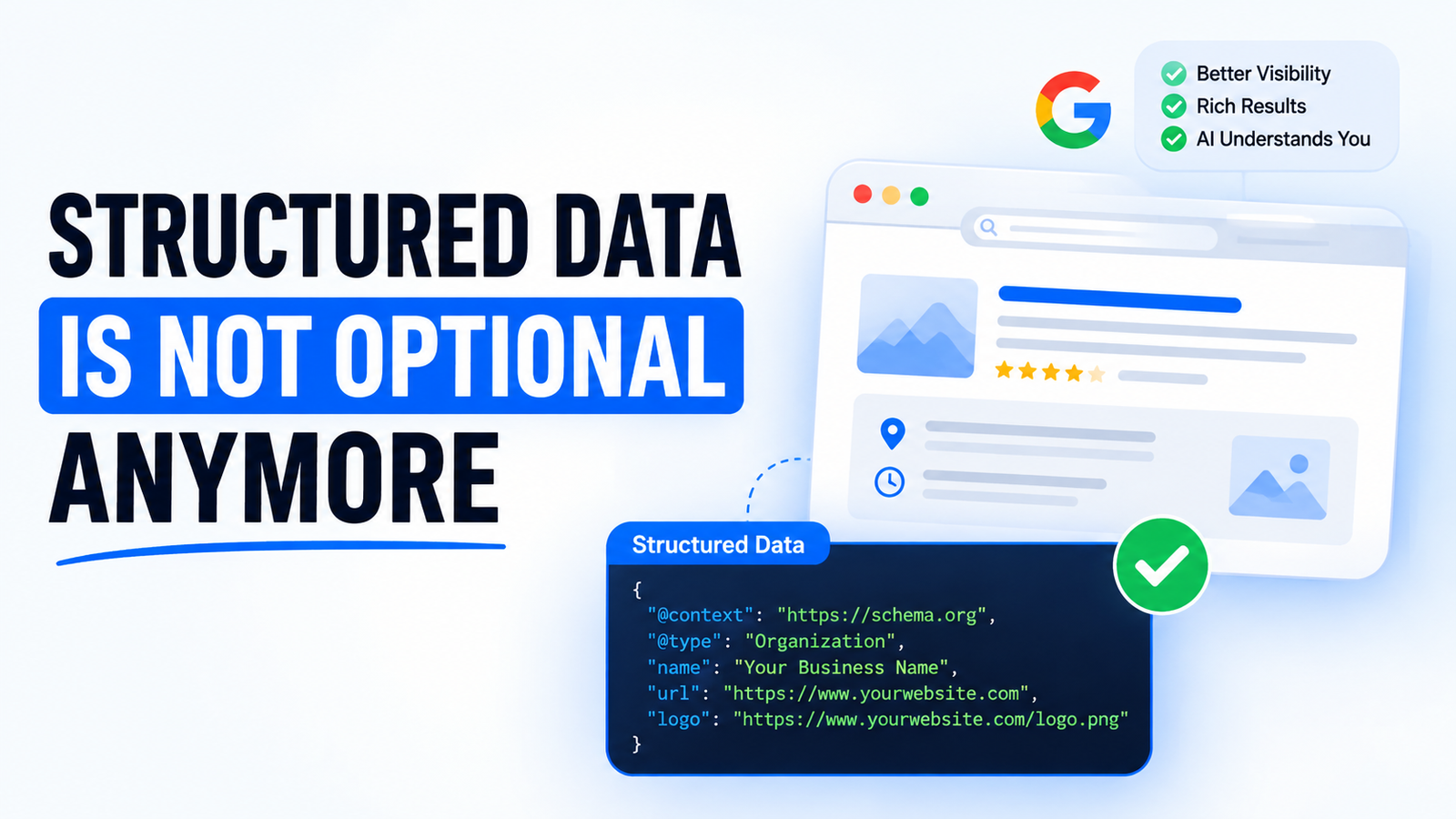
Schema in 2026: Structured Data Is Not Optional Anymore: A Local Business Owner’s Guide
Structured Data Is Not Optional Anymore: A Local Business Owner’s Guide to Schema in 2026 If you run a business and a member of your marketing team has referred to ‘schema ‘, you most likely agreed without really knowing what it meant. You’re not the only one; schema is one of those SEO subjects which people discuss a great deal but which seldom have simple explanations that actually make sense in the context of your business. In a nutshell, schema refers to structured data that you include in the code of your website to inform search engines about what your content is about; for example, your business name, address, hours, reviews, service area and so on. This information is not visible to people who visit your site; it simply remains in the background to help search engines understand what your page contains. In 2026, since search results are determined by AI and given that entity-based understanding is required, having a schema is no longer optional; it is a necessity, just as having a friendly website or a fast load time is. I carried out an audit of the schema on various local business websites, including my own. The following is what I found: schema is not a technical matter but rather a way of ensuring that search engines understand what your business is and what it does. Why Schema Matters More in 2026 Than It Did a Year Ago A number of years ago, schema was merely a checkbox for SEO, but nowadays search engines use AI to work out what your business is and what it does; if a search engine cannot clearly determine what your business is, where it operates and what it offers, then it is less likely to display your business in the search results. That is the reason why I regard schema as a means of ensuring that search engines have information regarding your business; you are not attempting to trick an algorithm, you are simply making sure that search engines understand what your business is. The Moment Schema Actually Clicked for Me I only completely realised the value of schema in 2026 when I saw it in use on my site. Once I had added the schema data and checked that it was valid, I noticed that the search results had changed; they were now more informative and stood out. It was at that moment that I realised that a schema is not a trick but a method of connecting what my website states with what search engines understand. What Schema Actually Does (and Does Not Do) Schema markup enables search engines to understand the type of business you have, your business details and the way in which your content is organised. It’s similar to giving a thoughtful assistant a neat and clearly labelled folder rather than a disordered pile of papers. It doesn’t remedy existing problems; the schema in 2026 won’t make up for poor content, inconsistent business details, or negative reviews. It won’t automatically boost your position in search results and cannot guarantee a rich result. The Core Schema Types for Local Businesses For business websites, you don’t need dozens of schema types—just the ones that are implemented accurately. The basic collection comprises: * Organization: establishes your brand as an entity that Google can recognize * LocalBusiness: communicates your business type, location, hours and local-search signals * Person: connects an individual like a founder or consultant to the brand * Website: this term refers to the entire site. It has the capability of enabling a sitelinks search box. * WebPage: describes pages and their role on the site * BreadcrumbList: shows content hierarchy and navigation path * FAQPage: only when a page genuinely contains a clear question-and-answer format All of these types of schema have different roles but function most effectively when used together. JSON-LD vs Microdata: Which One to Use I put the schema into JSON-LD since this is usually the better option for SEO; it separates the data from your HTML, which makes maintenance and updates easier. A Mistake I See Often During Audits A problem that I notice is schema in 2026 that is technically there but in fact incorrect. A business might have LocalBusiness schema, even though the information is out of date or inaccurate. Another error is including FAQ or review markup on pages for which it is not appropriate. The takeaway is that you shouldn’t include schema in 2026 merely because you want to have schema in 2026; each property should be describing something that is actually true and observable on the page. A Simple Framework to Start With If your local business does not already have schema in 2026, don’t attempt to include all the details at this stage. Here is a simple plan: * Make sure your business information is consistent across your website and Google Business Profile Begin with the different types of schema in 2026 and implement them accurately. * Check your schema periodically to make sure it is up-, to-date and accurate All other elements are based on this one. It is necessary to carry this out before you begin to code anything. Include the schema on your website and use JSON-LD format for LocalBusiness, Organisation, WebSite, WebPage and BreadcrumbList. If your business is a specific type, for example a restaurant or a dental office, then use that type rather than the general one. The more accurate and correct the type is, the better it will work. Make sure to check and continue to monitor it. You can use the Google Rich Results Test to verify that your setup looks correct in Search Console by looking for any errors in the data; keep monitoring it over time. Do not expect your rankings to improve immediately and do not become concerned if no changes are visible right away. Structured data is a method for improving clarity in the long term, not a solution. To sum up: first the accurate details, then
Read More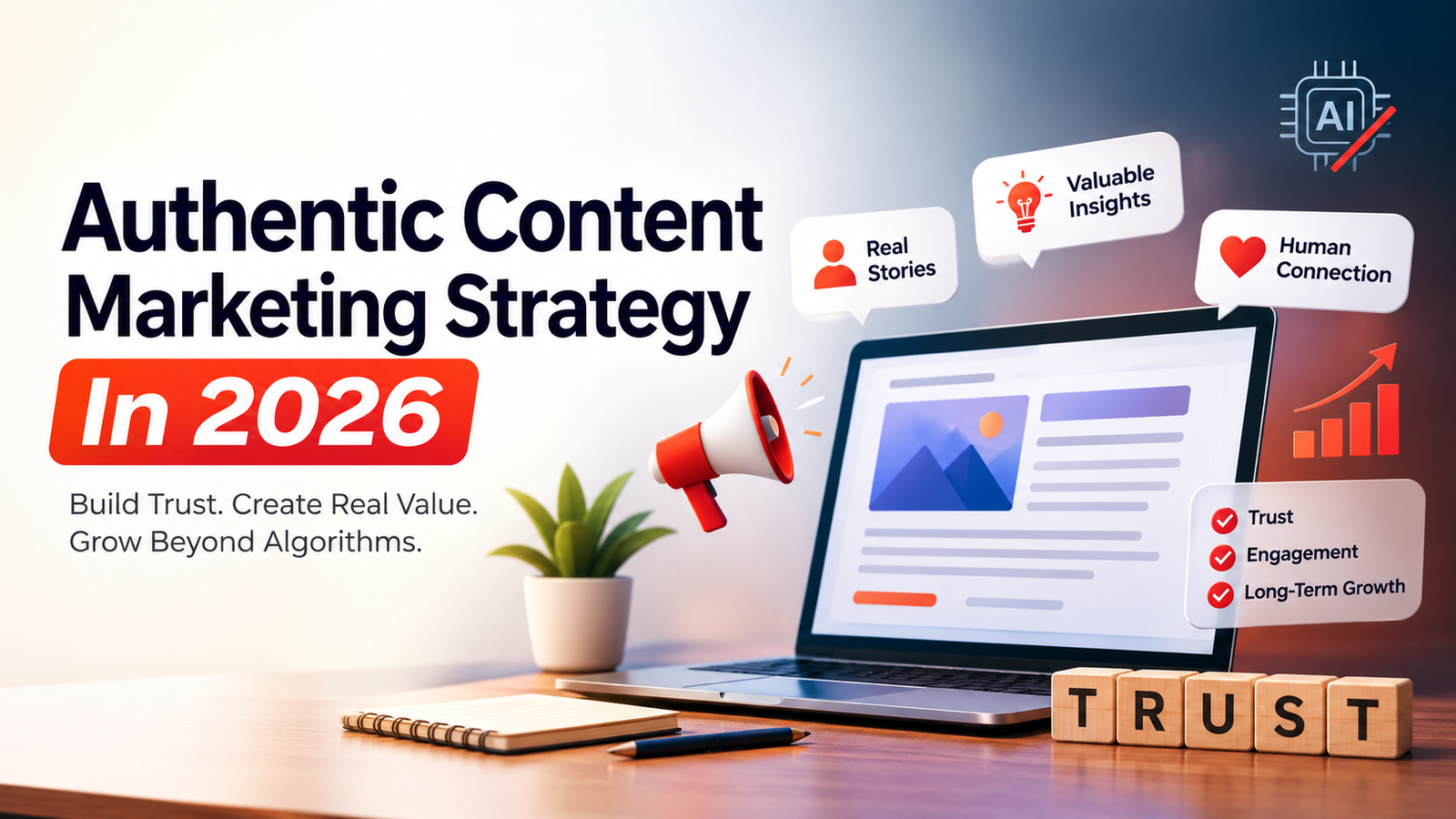
Why An Authentic Content Marketing Strategy In 2026 Beats Polish In The Age Of AI
Why An Authentic Content Marketing Strategy In 2026 Beats Polish In The Age Of AI I have been using LinkedIn and Instagram a lot lately. Most posts look the same to me. They have pictures and confident captions. They do not really say anything. This is a problem that an authentic content marketing strategy is trying to solve. I noticed this when I was building my marketing portfolio, and it’s exactly what shaped my approach to an Authentic Content Marketing Strategy In 2026. The posts that did well were not the ones that looked professional. They were the most transparent ones — proof that an Authentic Content Marketing Strategy In 2026 rewards honesty over polish. Of the posting tips I started sharing, what I was actually learning about were topics like GEO, AEO, and AI search, all filtered through the lens of an Authentic Content Marketing Strategy In 2026. I shared my thought process, my reasoning, and what I learned from creating the content, because that’s the core of any real Authentic Content Marketing Strategy In 2026. Those posts did well. People actually talked to me about them, which told me an Authentic Content Marketing Strategy In 2026 isn’t optional anymore — it’s the differentiator. That taught me something: people don’t follow experts. They follow people who show how they think. This isn’t about style. It’s about what earns attention and trust, and it’s the foundation of any Authentic Content Marketing Strategy In 2026 worth building. That shift is happening right when AI tools are making it easier than ever to churn out content, which is exactly why an Authentic Content Marketing Strategy In 2026 matters more than ever. Every brand chasing relevance needs an Authentic Content Marketing Strategy In 2026 — not a louder one, a more honest one. In the end, an Authentic Content Marketing Strategy In 2026 wins because it can’t be mass-produced. The Polish Trap: When Content Looks Good. Says Nothing I see a pattern where a company posts something that looks professional. It does not really say anything. It might have pictures and buzzwords. There is no story behind it. No customer example, no lesson learned, no evidence to back up the claim. This comes across as fake. Audiences are getting better at spotting the difference. Try this test: strip the logo off a post. Can you still tell which company wrote it? If not, it’s probably for show, not substance. Real authenticity is specific. Specific enough that it could only have come from you. This matters now that AI tools can produce content in seconds. When it becomes easy to make things look good, it stops being something that sets you apart. What is left is substance. That is what AI cannot manufacture: experience, evidence, and a genuine point of view. A Simple Filter For Authentic Content I have developed a checklist that I use before publishing any content. It is not complicated. It has caught a lot of content before it went live: What Happens When Businesses Make The Shift This is not about branding; it is about what happens when businesses make the shift to content. A local service business might move away from stock graphics and generic captions. Start posting project photos, introducing team members, answering customer questions, and sharing genuine testimonials. The results vary. The direction is consistent: engagement, saves, shares, comments with questions, website visits, and higher-quality inquiries. Authentic content tends to attract people who’re already closer to a buying decision than passive scrollers. Will Authenticity Matter More As AI Content Grows? My honest take is yes. Not because audiences are going to reject AI-generated content. It is because AI is making content to produce. When everyone can generate a post in seconds, “well-written” stops being impressive. It becomes the baseline. What can’t be mass-produced is experience. A lesson, an opinion actually shaped by doing the work. That’s where brand trust in the age of AI content gets won or lost. Not production quality. Whether there’s a person behind the words backing them up with real evidence. FAQ Is Content The Same As Unpolished Content? No, authenticity is about substance and honesty, not sloppiness. You can be well-designed and authentic at the same time. Can AI-Assisted Content Still Be Authentic? Yes, as long as the ideas, experience, and point of view originate from a person. AI can help with structure or editing. The substance has to come from expertise or experience. How Do I Know If My Content Is Too Generic? Run it through a test: could a competitor post the same thing word-for-word? If yes, it is probably too generic. It needs an example, opinion, or piece of evidence. Does Authenticity Mean Sharing Everything, Including Failures? Not everything. Being willing to mention limitations, mixed results, or lessons learned tends to build trust more than a highlight reel. Is This Approach For Personal Brands? Does It Work For Companies Too? An authentic content marketing strategy is what beats polish in the age of AI. An authentic content marketing strategy is about being honest and transparent. It is what people are looking for. An authentic content marketing strategy is not about branding; it is about what happens when businesses make the shift to content. It works for both, though it looks different. A solo creator can share their experience directly. A larger company can do the same by featuring employees, real customer stories, and real behind-the-scenes decisions of anonymous corporate messaging. Build Content People Trust A real content marketing strategy is not about abandoning polish. It is about making sure there is something underneath it. As AI makes produced content the default, the businesses and creators who stand out will be the ones to show their actual thinking, admit what they do not know, and back up their claims with experience. Actionable takeaways: This strategy is about being real. It is what will make content marketing work for the content creators and the businesses. People will trust the content
Read More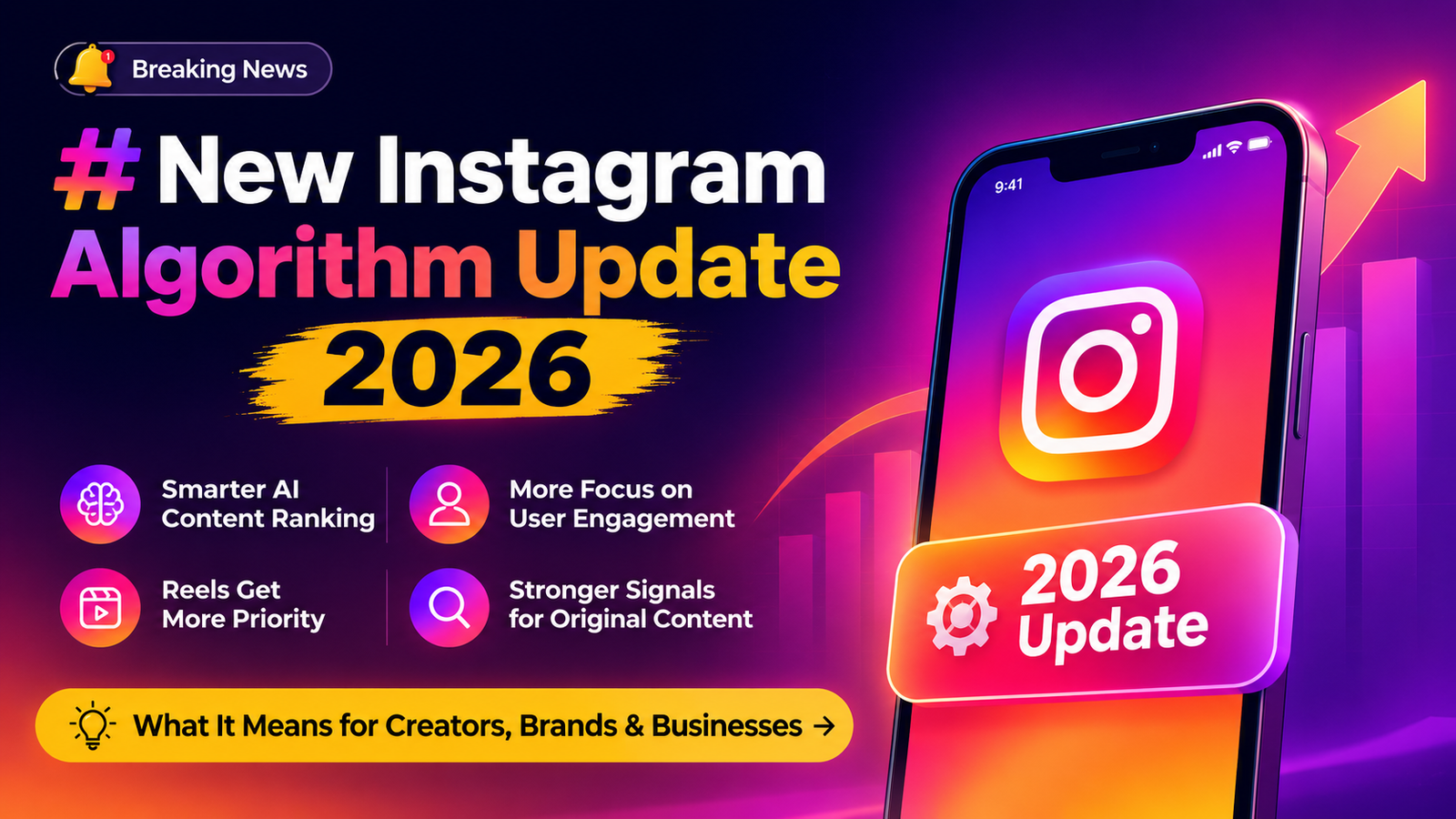
New Instagram Algorithm Update 2026
If you feel like your Instagram content is doing everything right. Still not growing the way it used to, you are not imagining it. The New Instagram algorithm update 2026 has changed the rules. Understanding how to beat the New Instagram algorithm update 2026 means unlearning much of what used to work. I run marketing for businesses and personal brands. Over the past few months, I have watched a clear pattern emerge across the accounts I manage. It was not one drop in reach or a single viral post that tipped me off. It was something. Content that followed the old checklist was still getting posted. It was still technically optimized. However, the results started drying up. I saw saves, shares, and real conversations in the comments. I saw people actually engaging with the Instagram content. What is Actually Changing: The Rise of User Content Choice The core shift behind this update is what I would call user content choice. Instagram is content that people actively choose to engage with. Not content that is simply engineered to be shown to them. This is a change. The New Instagram algorithm update 2026 is all about user content choice. This mirrors something happening across search broadly. As AI-powered answers reduce the need for people to click through to a website, platforms are shifting from content that ranks high to content that earns genuine trust. From users. From AI systems evaluating quality. This is a deal. The New Instagram algorithm update 2026 is part of a shift. On Instagram specifically, this shows up as: I saw this firsthand with an educational carousel I posted. To explain a concept in a definition-first way, I broke it down using a real-world scenario. I added my take. Compared to posts I had published before, it generated saves, shares, and profile visits. Because people found it genuinely useful, not just informative. The New Instagram algorithm update 2026 is all about being useful. New Instagram Algorithm Updates 2026 for Business Accounts: What They Mean for You If you run a business account, this update changes your content calendar logic. It is no longer about staying visible through frequency. It is about staying valuable enough that someone actively chooses to save, share, or come back to your profile. This is a change. The Instagram algorithm update 2026 is about being valuable. For business accounts, this update rewards: The Mistake Most Business Accounts Are Still Making The single biggest mistake I see now is businesses creating content for the algorithm, not for the audience. Many accounts post daily simply because they believe consistency alone drives growth. When every post looks like advice, a trend, or obvious AI-generated filler, people scroll past it. The algorithm notices that too. This is exactly the kind of mistake the New Instagram Algorithm Update 2026 is designed to punish. The New Instagram Algorithm Update 2026 rewards content built for the audience, not the algorithm. If I had to give one piece of advice to stop immediately, it is this: stop posting content just to stay active. Post less if you have to. Make every post worth someone’s time. An experience of a customer question answered honestly. A story only your business can tell. Under the New Instagram Algorithm Update 2026, attention is not the resource anymore. Trust is. The New Instagram Algorithm Update 2026 is, at its core, about building trust. My Framework for Beating the 2026 New Instagram Algorithm Here is the process I use now. It starts with a question. I no longer ask, “What do I want to post?” I ask, “What problem is my audience trying to solve?” This is a change. The Instagram algorithm update 2026 is about solving problems. Before I build any post, I run the idea through three filters: If I cannot honestly answer yes to those, I rethink the idea before I move forward. This is a deal. The New Instagram algorithm update 2026 is about being honest. How I Structure a Post Once the Idea Passes the Filter Once an idea clears that filter, I structure it around four things: This is the shift in mindset that matters most. I no longer create content to satisfy the algorithm. I create content to satisfy the person reading it first. When that happens, the algorithm tends to follow. Because it is built to detect and reward that kind of engagement. The Instagram algorithm update 2026 is all about engagement. Does This Actually Move the Needle? I will be upfront. I do not believe in citing case studies I cannot fully verify. So I will not hand you a before-and-after number here. What I can tell you honestly is what I track and what I have consistently observed since the New Instagram Algorithm Update 2026 rolled out. Across my content and accounts, I manage posts built around a problem, an example, or a genuinely unique angle that consistently generate more saves, shares, meaningful comments, and profile visits than generic “10 tips” style content. One clear example: an educational post where I explained a marketing concept through a real-world scenario sparked more comments and shares than similar posts I had created before the New Instagram Algorithm Update 2026 changed what actually gets rewarded. That is why my own success metric has shifted. Reach alone does not tell me much anymore under the New Instagram Algorithm Update 2026. I pay attention to saves, shares, profile visits, and inquiries. Because those are signals that content actually influenced someone’s decision, not their scroll speed. The New Instagram Algorithm Update 2026 is fundamentally about influencing decisions, not just chasing impressions. Final Takeaway Beating the New Instagram algorithm in 2026 is not about finding a hack or posting schedule. It is about accepting that the algorithm is increasingly a mirror of choice. The accounts that win are the ones asking what their audience actually needs. Not what the New instagram algorithm 2026 might reward this week. The Instagram algorithm update 2026 is about
Read More